Visiting Egypt in February puts you in the month the insiders choose, and here is why
Visiting Egypt in February puts you in the month the insiders choose, and here is why
Egypt in February is the month people who know the country pick for themselves. It is still winter, so Luxor and Aswan give you warm afternoons and cold, clear dawns, and the low winter sun makes this the best month of the year for photographs of the temples. On February 22 the sunrise reaches the sanctuary of Abu Simbel, Valentine's week fills the better Nile ships with honeymooners, and Presidents Day weekend brings a wave of Americans who want a short winter escape. Crowds are lighter than December but the good cabins still go early. Pack a real jacket for the top deck, keep the last week of the month flexible in case of a sandstorm, and book the ship before anything else.
What February feels like on the ground
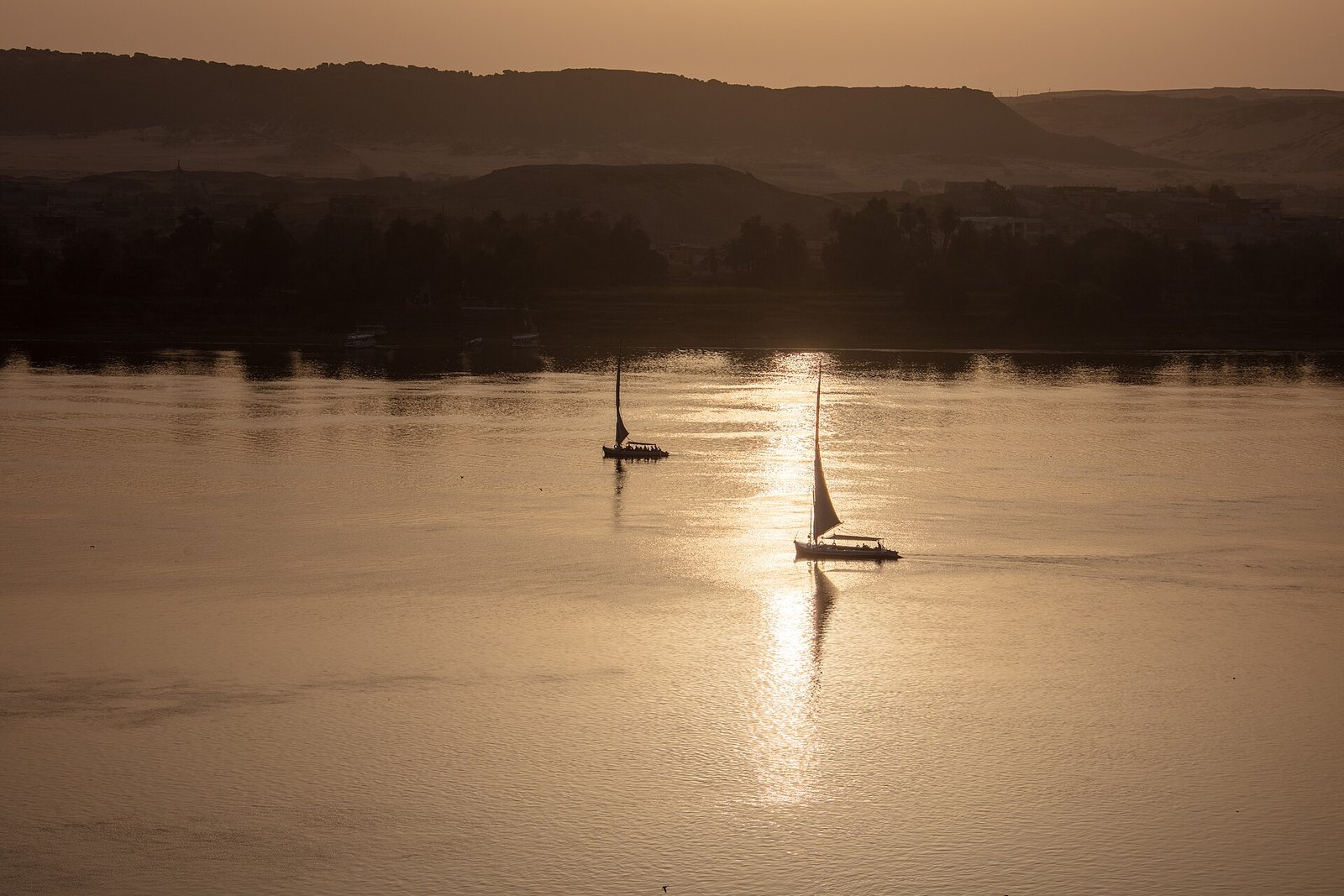
The first thing you notice in February is the gap between dawn and noon. On the top deck of a Nile ship at six in the morning you want a fleece, a hat and both hands around a cup of tea. By eleven the same deck is in shirt sleeves. The day starts in the mid 40s Fahrenheit, about 7 Celsius, and ends in the mid 70s, around 24 Celsius, with not a cloud in between.
The second thing is the light. The sun sits low all day, the air is dry and clean, and the sandstone at Karnak and Edfu takes on a colour it does not have in the hot months. Photographers who come to Egypt every year come now.
The third thing is the mood. The Christmas and New Year rush has gone home, the ships are still full but not frantic, and the guides have their patience back. This is the tail of high season, and the part of it we would choose. Our overview of the whole calendar is in the guide to the best time to visit Egypt.
The best light of the year: why photographers book February
Every month in Egypt has sun. February has the right sun. In summer it climbs almost overhead by mid morning and flattens every relief into a white wall. In February it stays at a lower angle through the whole day, so the reliefs at Edfu and Medinet Habu keep their shadows and depth until well after lunch.
Dawn on the west bank of Luxor is the one to plan for. The cliffs behind Deir el Bahari face east and light up first, and if the balloons are flying you get them against a pink sky. In December the same dawn is often hazier. In March the khamsin starts putting dust in the air. February sits between the two.
Where to be, and when:
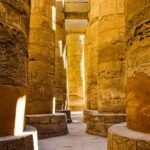
- Karnak: the first hour after the gates open, low sun sideways through the hypostyle hall.
- Valley of the Kings: mid morning, once the early groups have moved on.
- Philae: late morning by boat, side-lit from the south.
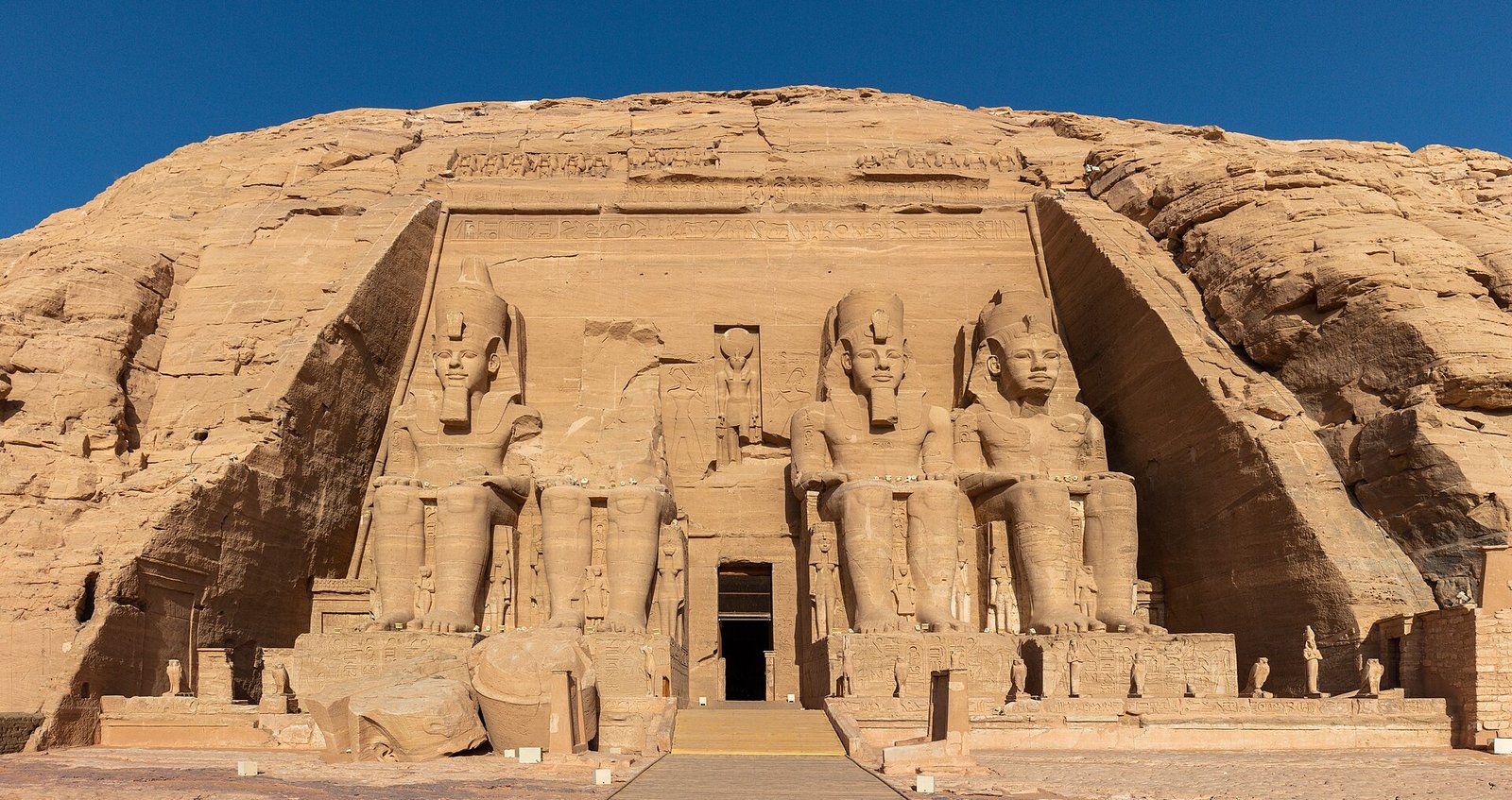
- Abu Simbel: sunrise, any day of the month, and especially the 22nd.
- Giza: the last hour before the plateau closes, side-lit from the west.
Our notes on what you may and may not photograph inside tombs and museums are in photography tips and camera rules for Egypt.
February 22 at Abu Simbel: the winter sun alignment
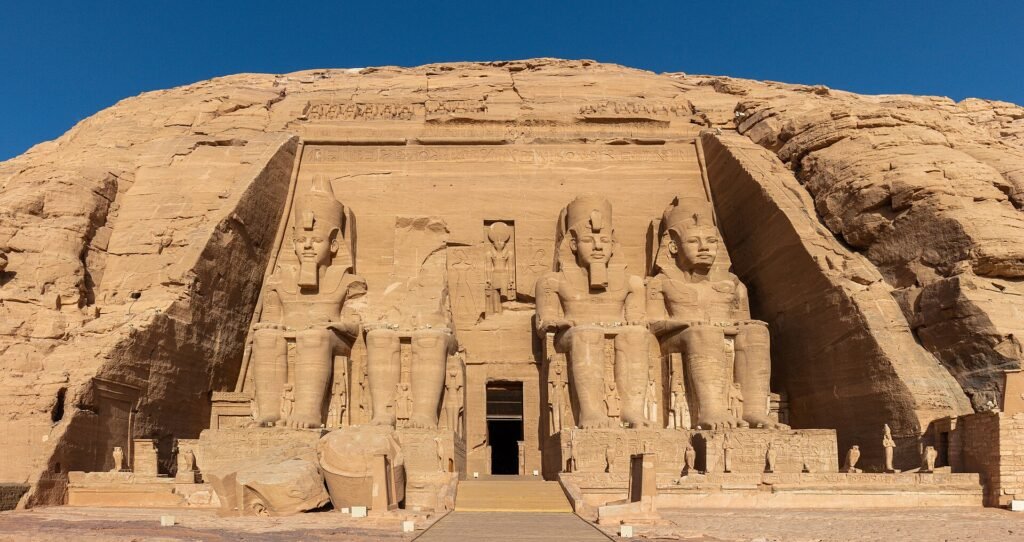
Twice a year the rising sun travels the length of the Great Temple of Abu Simbel and lights three of the four seated gods on the back wall: Ramses II, Amun and Ra-Horakhty. Ptah, god of the underworld, stays dark. The dates are February 22 and October 22, and February is the winter version: colder, darker at the gate, and with a smaller crowd.
That smaller crowd is the point. In October you queue from the small hours inside a festival. In February the line to the sanctuary moves faster and you have both temples to yourself for longer once the beam has gone. The full history and what you actually see inside are on our page about the Abu Simbel sun festival.
How we run the day in February:
- Sleep in Aswan on the night of the 21st.
- Leave by road around three in the morning. The drive is about three hours and the desert road is cold, so the coats stay on.
- Be inside the gate before first light. The beam enters a few minutes after sunrise and is gone within about twenty minutes.
- See both temples properly once the crowd thins, including the temple of Nefertari, then breakfast.
- Back in Aswan by early afternoon, in time to board the ship.
If your dates miss the 22nd by a few days, the sun still reaches deep into the temple. If they miss it by two weeks, do not rewrite the trip around it; a normal Abu Simbel day in February is one of the best days of the year regardless.
Valentine's on the Nile: honeymoons, dahabiyas and getting the cabin you want
February has a second date that matters more to the ships than the sun does. Valentine's week is the one week of the winter when couples outnumber families on the Nile, and the boats know it. Balcony suites, upper deck cabins and the small sailing dahabiyas go weeks ahead.
If you are coming for a honeymoon or an anniversary, this is what actually makes the difference:
| What you want | Best option in February | Why |
|---|---|---|
| Privacy and a slow river | A dahabiya, a handful of cabins under sail | No engine, no fixed schedule, moorings at islands the big ships pass |
| Space and a pool on deck | A five star ship, upper deck suite | Warm deck at midday, sunset from your own balcony |
| City dinners and a pyramid view | A Giza hotel plus a four night cruise | Rooftop dinners are comfortable in February; in summer they are not |
| A beach at the end | Cruise first, then the Red Sea | The water is cool but the afternoons are made for a sunbed |
Our guide to the dahabiya Nile cruise explains how the sailing boats differ from the big ships, including the one honest drawback in February: a cold night on a wooden boat is colder than one on a steel ship, so ask for extra blankets.
Valentine's Day is not a holiday in Egypt, but the ships lean into it, with set dinners on deck and petals on the bed. If you would rather skip that, say so and we will put you on a ship that does not do it.
Presidents Day weekend: a long weekend is too short, a week is right
The third Monday of February gives a lot of Americans a three day weekend, and the question is whether Egypt can be done on it. On its own, no; there is not enough ground time. What works is Presidents Day plus the week either side of it, which is what many families and couples already do for a February break.
| Trip | Nights in Egypt | What fits | What does not |
|---|---|---|---|
| The long weekend alone | 3 to 4 | Cairo only: Giza, Saqqara, the two big museums | Luxor, Aswan, the Nile |
| Presidents Day plus the following week | 7 to 8 | Two nights in Cairo, a four night cruise, Abu Simbel by road | The Red Sea, the desert |
| Presidents Day plus two weeks | 12 to 14 | All of the above plus Hurghada or a night in the White Desert | Nothing that matters |
The structure for the middle row is laid out day by day in our Egypt itinerary for 7 days. In February we tilt it toward the cruise and put Cairo at the end, so the museum days are the ones closest to any late month dust.
One warning. Presidents Day week is also a school break in several states, so the ships fill for the same dates the honeymooners want. Book the ship first and book it early.
How cold Egypt gets in February, region by region
Cairo and Giza
Afternoons in the high 60s to low 70s Fahrenheit, roughly 20 to 22 Celsius, and mornings in the high 40s, around 9 Celsius. Cairo can have a grey day or two and the odd short shower. The Giza plateau is windy, and the wind is the cold, not the air.
Luxor and Aswan
The warmest part of the country. Luxor afternoons sit in the mid 70s Fahrenheit, about 24 Celsius, Aswan a couple of degrees warmer, and both wake to dawns in the mid 40s Fahrenheit, around 7 Celsius. By the last week the afternoons creep toward 80 Fahrenheit, about 27 Celsius, and you can feel spring arriving on the river.
The Red Sea: Hurghada, El Gouna and Sharm el Sheikh
Low 70s Fahrenheit by day, about 22 Celsius, with water around 70 Fahrenheit, 21 Celsius. Divers are fine in a wetsuit; swimmers from Florida will call it cold. Sharm el Sheikh is a degree or two warmer and better sheltered from the north wind.
The Western Desert and Sinai
Nights near freezing in the White Desert and on the slopes of Mount Sinai. Days in the 60s Fahrenheit, around 17 to 19 Celsius. The camps run in February and the stars are the clearest of the year, but this is a sleeping bag trip, not a blanket trip.
Alexandria and the north coast
The one region that is genuinely wintry. Highs in the low 60s Fahrenheit, about 17 Celsius, grey afternoons, rain on several of them and a sea nobody swims in. Go for the seafood and the corniche, not the beach.
The tail of high season: what thins out and what does not
High season in Egypt runs from October to April, and February is its last busy month before the spring break weeks. Why the year splits that way is on our page about high and low season in Egypt. On the ground in February it means this.
- The Valley of the Kings at nine in the morning is still crowded. At eleven it is not, and February lets you go later without paying for it in heat.
- The big ships still sail full around Valentine's and Presidents Day. Between those two dates, and in the last week of the month, there is more room and more choice of cabin.
- The pyramid view rooms in Giza that were impossible in December can usually be found.
- Guides and drivers are rested, which sounds trivial and is not.
- Balloons, sound and light shows and the feluccas all run at full winter schedule.
The comparison with the month before is worth making. December is colder at dawn, busier over the holidays and hazier for photographs. What December has that February does not is the school holiday. If you are choosing between them, read our guide to visiting Egypt in December, then ask whether your dates are fixed by a school calendar or by preference. If preference, February wins.
Sandstorms late in the month: what happens and how we plan around them
From the last week of February the first hot, dry winds of spring start blowing up from the south, carrying dust. Egyptians call the season the khamsin and it belongs mostly to March and April, but the first day or two can land in February. It is not dangerous. It is a yellow sky, grit in your teeth and a temperature that jumps twenty degrees Fahrenheit for an afternoon.
What a dust day does to a trip:
- Balloons do not fly. You are moved to the next morning if the schedule allows.
- Domestic flights between Cairo and Luxor or Aswan can be delayed. If Abu Simbel is on the plan, the road from Aswan is more reliable than the air on a dust day.
- Photography is off for the day.
- Museums, tombs and the ship's lounge are unaffected, so the day is not lost, it is swapped.
We build February itineraries with the outdoor days early and the indoor days late for exactly this reason. If a sandstorm arrives, we move the Grand Egyptian Museum forward and the Giza plateau back a day. It happens perhaps one February in three, almost always after the 20th.
What to pack for February: dressing for two climates a day
The February packing mistake is packing for a desert. You are packing for a cold morning and a warm afternoon, every single day, for the whole trip.
- A real jacket, fleece or light down, for the top deck at dawn and the Abu Simbel drive. Not a windbreaker.
- A beanie and light gloves, for two hours a day.
- Closed shoes with grip for the tombs; sandals only on the ship.
- A scarf that doubles as dust protection if the wind turns in the last week.
- Sunscreen and a hat. The winter sun is low but it is still Egyptian sun.
- Swimwear for the ship's pool at midday and for the Red Sea if it is on the plan. The water is cool; the sunbeds are not.
Our longer list is in what to pack for a Nile cruise. The daypack advice there matters more in February than in any other month, because you will be carrying a jacket by ten.
February against December and March, and if Ramadan falls in your dates
The three winter months look alike on a weather app and not on the ground.
| December | February | March | |
|---|---|---|---|
| Dawn in Luxor | Low 40s Fahrenheit, about 6 Celsius | Mid 40s Fahrenheit, about 7 Celsius | Low 50s Fahrenheit, about 11 Celsius |
| Afternoon in Luxor | High 60s Fahrenheit, about 20 Celsius | Mid 70s Fahrenheit, about 24 Celsius | Low 80s Fahrenheit, about 28 Celsius |
| Crowds | Holiday peak | Two spikes, then the tail | Spring break from mid month |
| Light for photographs | Clear but often hazy | The best of the year | Dust days begin |
| Fixed dates | Christmas and New Year | Abu Simbel on the 22nd, Valentine's, Presidents Day | Khamsin season opens |
| Balloons | Fly, cold basket | Fly, cold basket | Fly, warmer, some cancellations |
The Islamic calendar moves about eleven days earlier each year, so Ramadan falls in February in some years and not in others. We do not print dates because they change. If your dates fall inside it, the temples and museums open as normal, restaurants that serve visitors serve lunch, the ships serve every meal, and Cairo's evenings become the liveliest of the year once the fast breaks at sunset. Expect shorter hours in some offices and a slower afternoon pace. It is not a reason to avoid the month.
Frequently asked questions
Is February a good time to visit Egypt?
Yes, and for many people who know the country it is the best time. Luxor and Aswan are warm by day and cold at dawn, the light is the clearest of the year, and crowds are lighter than December while everything is still running. The trade offs are cold mornings, two busy weeks around Valentine's and Presidents Day, and a small chance of a dust day at the very end of the month.
How cold is a Nile cruise in February?
Cold at dawn and warm by lunch. The top deck at sunrise is in the mid 40s Fahrenheit, around 7 Celsius, and you will want a proper jacket, a hat and gloves for the first two hours. By midday the same deck is in the mid 70s, about 24 Celsius, and the pool gets used. Cabins are heated. Wooden dahabiyas feel colder at night than the big ships, so ask for extra blankets.
Can I see the Abu Simbel sun alignment on February 22 without a festival crowd?
The February alignment draws a smaller crowd than the October one because fewer tour groups are in Egypt, so yes, it is the calmer of the two. You still leave Aswan by road around three in the morning and stand in line in the dark, but the line moves faster and the temples are quieter once the beam has passed. Sleep in Aswan on the 21st; hotels there fill for that night.
Is Egypt busy over Valentine's week and Presidents Day?
The ships are. Valentine's week brings couples who want the balcony suites and the small dahabiyas, Presidents Day week brings American families on the school break, and the two often fall within the same fortnight. The temples are not overwhelmed, but cabin choice shrinks fast. If your dates fall in either week, book the ship first and build the rest of the trip around it.
Will a sandstorm ruin my February trip?
Unlikely, and if one arrives it costs you a day, not the trip. The khamsin winds belong to March and April; the first dust day can land in the last week of February in some years. On that day balloons do not fly and photographs are poor, so we swap in a museum day and move the outdoor plan by a day. Trips ending before the 20th can ignore the question.
Is the Red Sea warm enough to swim in February?
The water is around 70 Fahrenheit, 21 Celsius, fine for divers in a wetsuit and for a short swim, cool for anyone used to a Florida beach. The air is in the low 70s and the sun is strong, so afternoons on a sunbed in Hurghada, El Gouna or Sharm el Sheikh are very pleasant. Treat the Red Sea as a place to rest after the cruise, not as a swimming holiday, in this month.
February is the month we would pick for ourselves. Tell us your dates.
Send us the dates you have, whether that is Presidents Day week, the week of the 22nd or a honeymoon around Valentine's, and tell us who is traveling. We check which ships still have the cabins you want, build the days around the light, and send you the quote.